Can Generative AI Analyze Medical Data Faster Than Human Researchers?
A 2026 UCSF study shows generative AI analyzes medical datasets orders of magnitude faster than team


Introduction
There is a quiet transformation underway in biomedical laboratories — one that is compressing research timelines that once spanned years into weeks, and enabling small teams to do what once required entire departments. Generative AI in healthcare has moved well beyond the experimental stage. It is now producing measurable results in clinical data analysis, drug discovery, and predictive medicine.
The question is no longer whether AI medical data analysis can keep pace with human researchers. A growing body of evidence — including a landmark 2026 study from UC San Francisco and Wayne State University — suggests that in many scenarios, AI is already ahead. But speed is only part of the equation. The more pressing questions involve accuracy, reliability, governance, and how healthcare organizations can build the infrastructure needed to capture AI's full value. This article examines the latest evidence, what it means for the future of medical AI, and how research institutions and health enterprises should be thinking about their AI strategy right now.
Why Healthcare CIOs Need Enterprise Architecture to Scale AI. Access the full report here!
The Landmark Study That Changed the Conversation
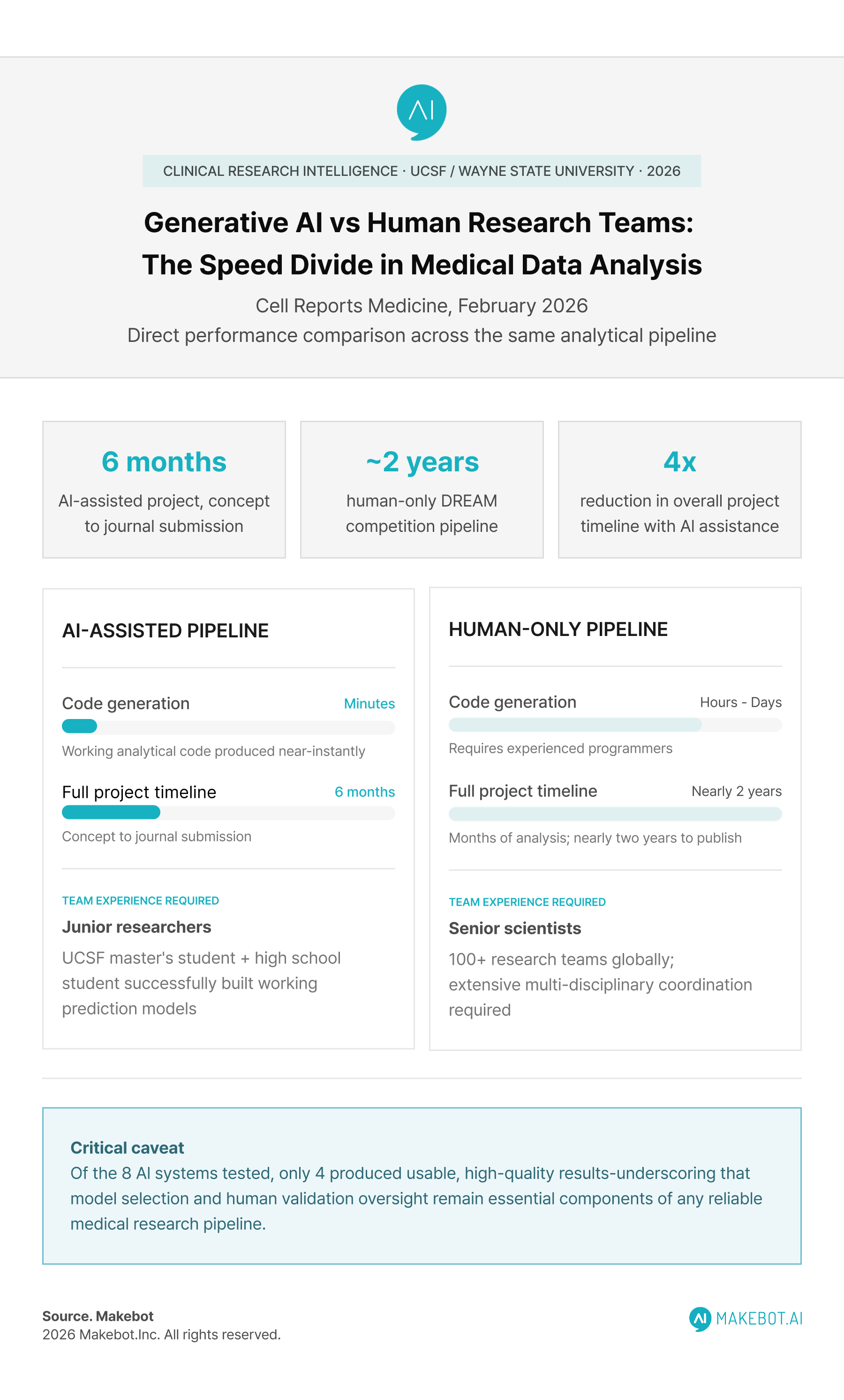
In February 2026, researchers at UC San Francisco and Wayne State University published findings in Cell Reports Medicine that sent a clear signal to the global research community. In a direct performance comparison, generative AI tools processed large-scale medical datasets dramatically faster than human research teams — and in some cases, produced stronger predictive results.
The researchers structured the experiment around a challenging clinical problem: predicting preterm birth using data from more than 1,000 pregnant women. This dataset had previously been the subject of a global crowdsourcing competition called DREAM (Dialogue on Reverse Engineering Assessment and Methods), where over 100 research teams worldwide spent months analyzing vaginal microbiome and blood sample data. Compiling and publishing those results took nearly two years.
The AI-assisted teams completed the same analytical pipeline in a fraction of that time. What made the findings particularly striking was the accessibility factor:
- A junior research pair — a UCSF master's student and a high school student — successfully built functioning prediction models using generative AI
- The AI system generated working analytical code in minutes, a task that typically requires experienced programmers hours or days
- The entire AI-assisted project, from concept to journal submission, was completed in six months — compared to nearly two years for the original human-only effort
Of the eight AI systems tested, four produced usable, high-quality code. The others failed outright — a reminder that not all healthcare AI tools are created equal and that model selection remains a critical decision point.
Dr. Marina Sirota, interim director of the Bakar Computational Health Sciences Institute at UCSF, framed the implications directly: the ability to accelerate analysis pipelines removes one of the biggest bottlenecks in data science, with direct benefits for patients who need answers now.
McKinsey: AI Could Save the Healthcare Industry $360 Billion Annually. Explore the latest insights here!
Why Medical Data Has Historically Been So Difficult to Analyze
To appreciate why AI for medical researchers is so consequential, it helps to understand the structural complexity of clinical data. Healthcare generates approximately 30% of the world's data, with a compound annual growth rate that McKinsey estimates will reach 36% by 2025. Unlike financial or transactional data, medical datasets are:
- Multimodal — combining structured EHR records, unstructured clinical notes, genomics data, imaging, and patient-reported outcomes
- Fragmented — spread across incompatible systems with inconsistent coding standards
- Privacy-restricted — subject to HIPAA, GDPR, and regional regulations that limit shareability and collaboration
- Imbalanced — rare diseases and edge cases are systematically underrepresented, skewing model performance
Traditional clinical data analysis required large, multi-disciplinary teams: biostatisticians, data engineers, bioinformaticians, and domain clinicians, all working in carefully coordinated pipelines. The result was scientifically rigorous but slow. For conditions like preterm birth — which affects approximately 1,000 babies in the U.S. every single day — that slowness has real human costs.
Generative AI does not eliminate the need for these specialists. What it does is compress the time-intensive, code-heavy portions of the pipeline, freeing researchers to spend more time on hypothesis generation, experimental design, and clinical interpretation.
The Growing Role of AI Chatbots in Modern Healthcare Communication. Read the expert analysis here!
Generative AI's Core Advantages in Medical Research
The UCSF/Wayne State study is a vivid illustration of a capability pattern that is emerging across multiple domains in AI in clinical research. Generative AI brings three distinct advantages that are difficult for human teams to replicate at scale.
1. Speed at Scale
Human research teams are rate-limited by cognitive bandwidth, working hours, and the sheer complexity of coordinating across specialties. Generative AI operates without these constraints. When applied to large, well-structured datasets, it can iterate through analytical approaches in the time it takes a human team to configure their environment. For the UCSF study, this translated to a 4x reduction in overall project timeline.
In drug discovery, the speed advantage is equally pronounced. A peer-reviewed analysis published in Nature Medicine in June 2025 documented the first AI-designed drug candidate — Rentosertib, developed by Insilico Medicine — completing Phase IIa clinical trials for idiopathic pulmonary fibrosis. The early discovery process from target identification to preclinical candidate nomination took 18 months with fewer than 80 molecules synthesized, versus the industry-standard 2.5 to 4 years. The full journey from concept to Phase I launch took 30 months — compared to the typical decade-plus in conventional drug development.
2. Pattern Recognition Across Complex, Multivariate Data
Generative AI models — particularly large language models combined with multimodal architectures — can detect correlations across dimensions that exceed human cognitive capacity. Stanford HAI's 2025 AI Index reported that AI models are increasingly capable of processing protein sequences, genomic data, and clinical records simultaneously, contributing to breakthroughs in precision diagnostics and molecular medicine. Since AlphaFold's deployment, the AlphaFold protein database has grown by 585%, expanding the universe of structural biology insights available for therapeutic development.
3. Democratization of Research Capability
Perhaps the most strategically significant advantage is accessibility. As the UCSF study demonstrated, AI for medical researchers without deep coding backgrounds now enables analyses that would previously have required a team of senior data scientists. According to Dr. Adi Tarca of Wayne State University, this means researchers can focus on asking the right biomedical questions rather than spending their time debugging analytical code.
This democratization effect has direct implications for healthcare equity. Research institutions in lower-resource settings — which have historically been underrepresented in global clinical evidence — can now participate meaningfully in high-powered data science.
How Generative AI and Automation Are Transforming Nursing Burnout Across Modern Healthcare Systems. Discover what’s next here!
What the Market Data Confirms
The performance evidence from academic research is being reinforced by enterprise adoption data across the healthcare industry. The signals from market surveys and industry analysts are consistently strong.
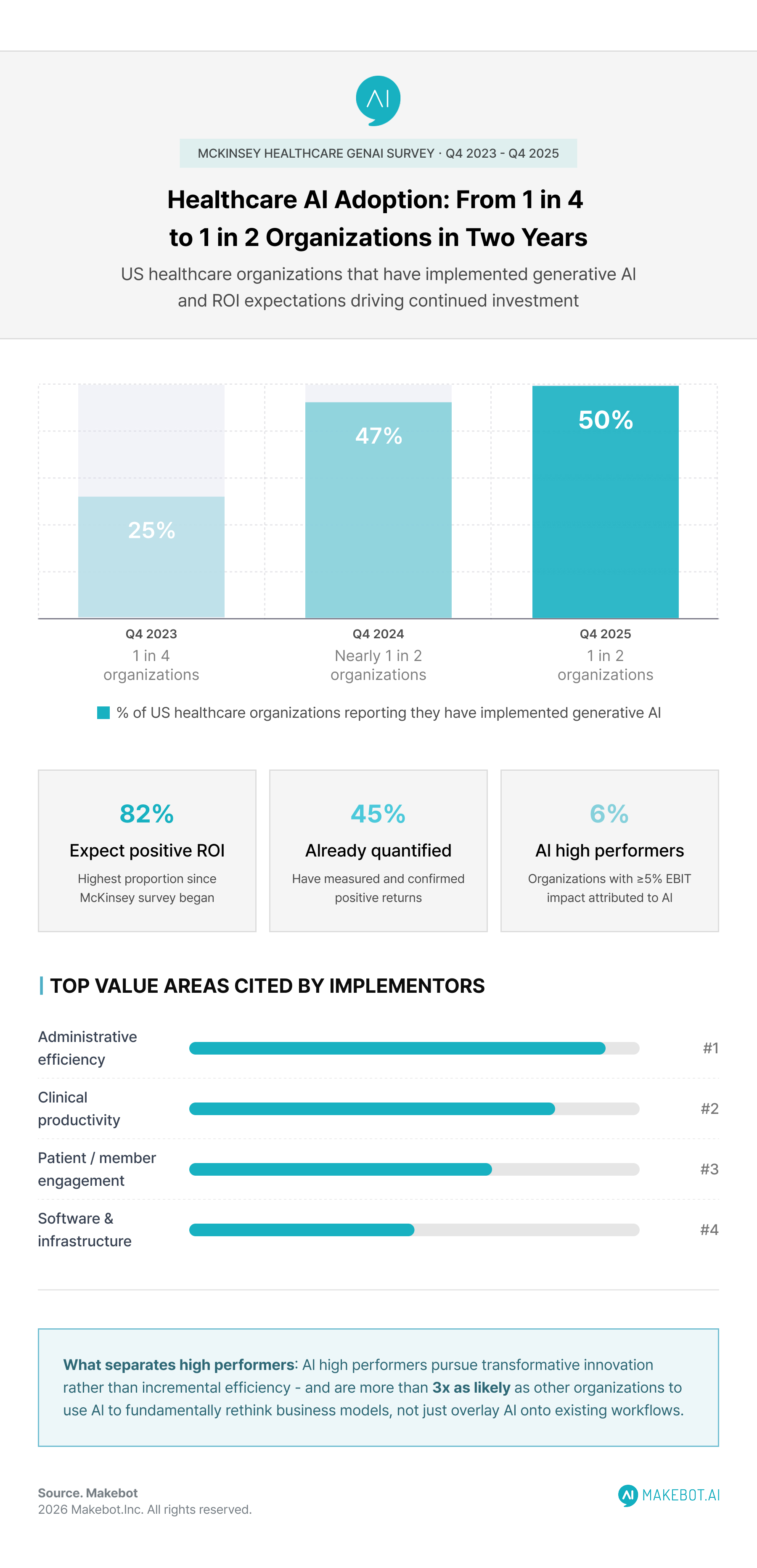
McKinsey's Healthcare GenAI Survey (Q4 2025) — the most recent in McKinsey's series, covering leaders from payers, clinical-care organizations, and healthcare services and technology firms — revealed a significant maturation in adoption. The findings:
- 50% of respondents now report their organizations have already implemented generative AI — up from 47% in Q4 2024 and just 25% in Q4 2023
- 82% of implementers expect positive ROI — the highest proportion McKinsey has recorded since the survey began — with 45% now quantifying that positive return
- Administrative efficiency is the most frequently cited domain for potential value, followed by clinical productivity, patient engagement, and software and infrastructure
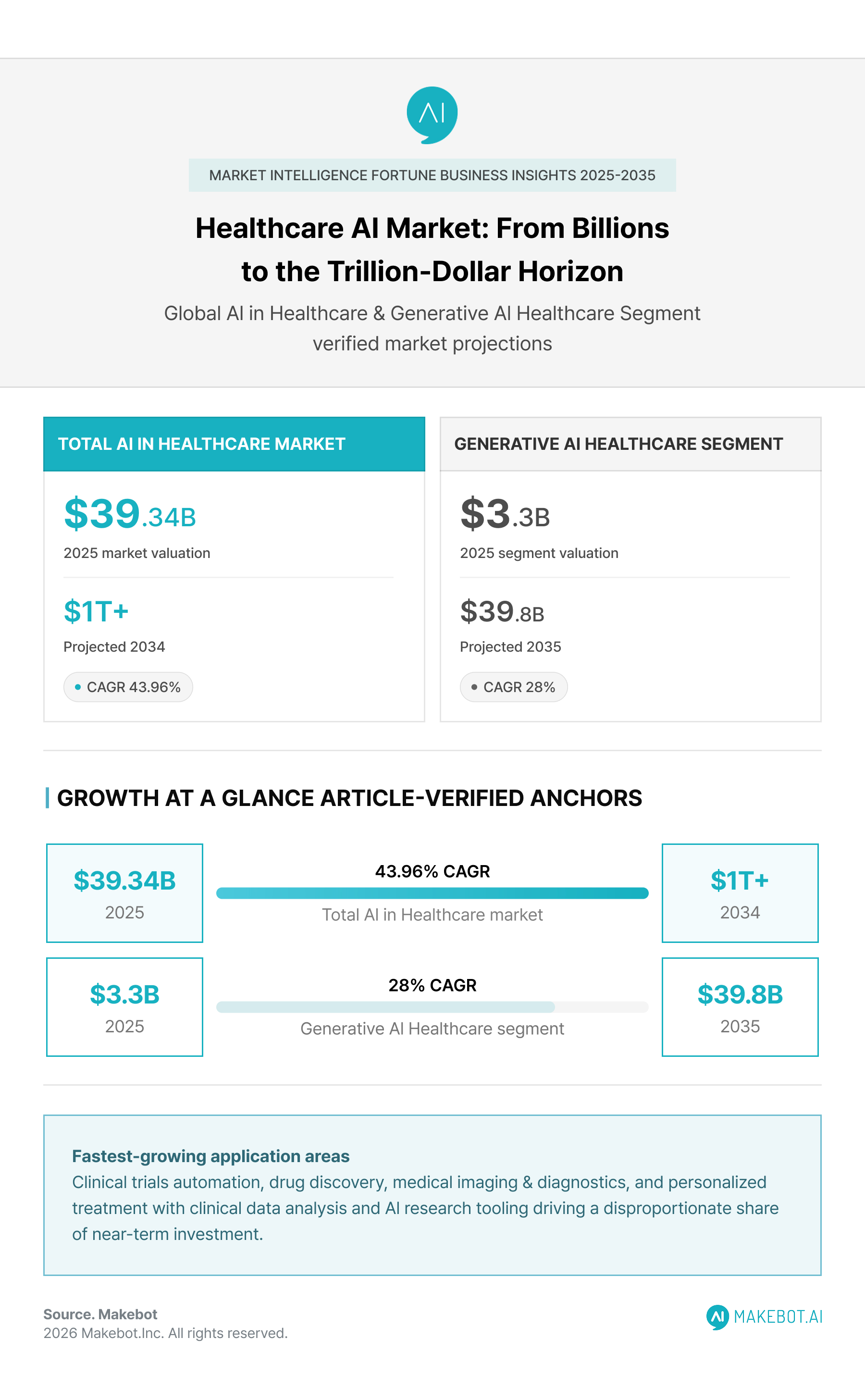
The NVIDIA Healthcare AI Survey adds further context, with 41% of healthcare organizations reporting that AI has accelerated their research and development efforts — the most commonly cited benefit of the technology. Meanwhile, the global AI in healthcare market, valued at $39.34 billion in 2025, is on a trajectory to exceed $1 trillion by 2034, according to Fortune Business Insights, reflecting a compound annual growth rate of 43.96%.
Within that broader market, the generative AI healthcare segment is growing even faster. Projected at $3.3 billion in 2025, it is forecast to reach $39.8 billion by 2035 at a 28% CAGR, with clinical trials, drug discovery, medical imaging and diagnostics, and personalized treatment among the top application areas.
Stanford Develops Real-World Benchmarks for Healthcare AI Agents. Explore the future of AI here!
Where AI Is Delivering the Strongest Research Outcomes
Not all applications of AI-powered healthcare are equally mature, and understanding where the technology delivers the most reliable value helps organizations prioritize their investments.
Genomics and Predictive Modeling
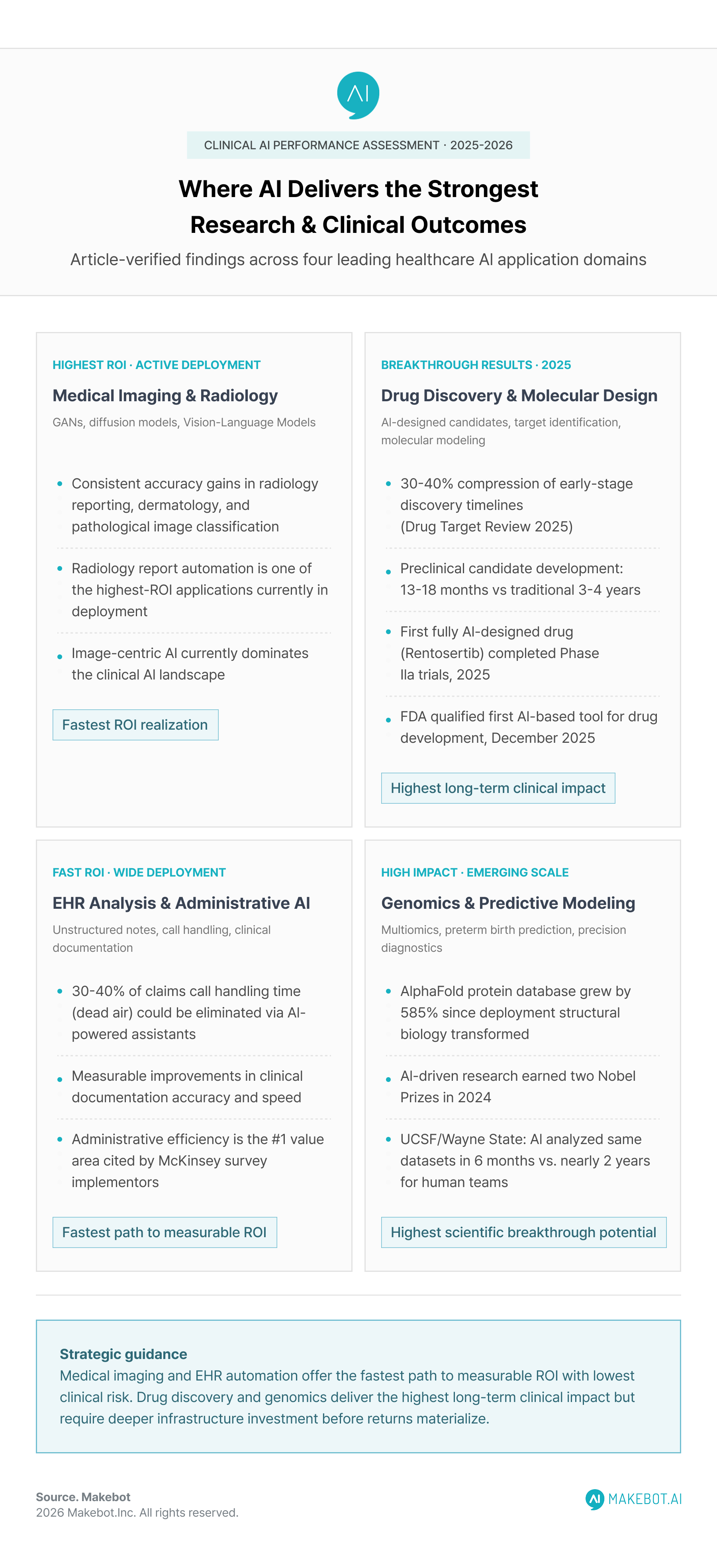
The UCSF/Wayne State preterm birth study is part of a broader wave of genomics research where AI is accelerating pattern detection in large, high-dimensional datasets. The Frontiers in Digital Health review (2025), which synthesized 15 clinical studies from 2020 to 2025, confirmed that data augmentation for imbalanced datasets and automation of expert-intensive analysis are the two areas where generative AI consistently outperforms conventional approaches.
Medical Imaging and Radiology
Image-centric AI applications currently dominate the clinical AI landscape. Generative Adversarial Networks (GANs), diffusion models, and Vision-Language Models have demonstrated consistent accuracy gains in radiology reporting, dermatological diagnosis, and pathological image classification. The automation of radiology reports — a labor-intensive, error-prone task — is one of the highest-ROI applications currently in deployment.
Drug Discovery and Molecular Design
The role of AI in medical research has arguably never been more visible than in drug discovery. AI has compressed early-stage drug discovery timelines by an estimated 30–40%, according to Drug Target Review's 2025 peer-reviewed analysis, while reducing preclinical candidate development to 13–18 months versus the traditional 3–4 years. The first entirely AI-designed drug to complete Phase IIa trials entered the literature in 2025, and the FDA's December 2025 qualification of the first AI-based tool for drug development clinical trials signals that regulatory infrastructure is beginning to catch up with the technology. As of early 2026, the first fully AI-developed drug approval is projected within the 2026–2027 window with approximately 60% probability.
EHR Analysis and Administrative Efficiency
Generative AI's ability to process unstructured clinical notes, call transcripts, and patient communications is a core use case for AI healthcare automation — unlocking insights from data that were previously too heterogeneous to analyze at scale. McKinsey's analysis found that healthcare organizations using AI for call handling and clinical documentation see measurable improvements — and that up to 30–40% of claims call handling time (currently wasted as dead air while agents search for information) could be eliminated through AI-powered assistants.
The Challenges That Still Limit Scale
Acknowledging AI's performance advantages does not mean the path forward is frictionless. Healthcare organizations pursuing AI healthcare automation at scale consistently encounter a common set of structural challenges.
Data quality and availability remain the most cited technical barrier in AI medical data analysis. The NVIDIA survey found that 33% of organizations identify data privacy and sovereignty issues as their biggest obstacle. Federated learning and synthetic data generation are emerging as partial solutions, but they introduce their own validation complexities.
Model reliability and hallucination are genuine concerns in clinical contexts. The Frontiers review noted that large multimodal AI systems can generate clinically plausible but factually incorrect outputs — a risk profile that demands robust human-in-the-loop validation before AI outputs influence patient care decisions.
Regulatory navigation is increasing in complexity. The FDA's January 2025 draft guidance on AI in regulatory decision-making established a seven-step credibility assessment framework, requiring lifecycle maintenance plans and mandatory transparency about model architectures. In Europe, the EU AI Act categorizes clinical AI tools as high-risk, imposing stringent compliance requirements.
Budget constraints were cited by 30% of organizations in the NVIDIA survey as a significant barrier, alongside insufficient data volumes for model training. Small and mid-sized healthcare providers face a structural disadvantage: the organizations with the most to gain from AI efficiency gains are often the least equipped to fund the implementation infrastructure.
What Separates High-Performing AI Adopters from the Rest
McKinsey's broader enterprise AI research offers a useful framework for understanding why some healthcare organizations are extracting measurable value from medical AI while others remain stuck in pilot cycles. The survey defined AI high performers as organizations attributing 5% or more of EBIT impact to AI — a group representing approximately 6% of all respondents. What distinguishes them:
- They pursue transformative innovation, not incremental efficiency
- They redesign workflows rather than overlaying AI onto existing processes
- They scale faster and invest more heavily in AI capabilities
- They are more than three times as likely as other organizations to use AI to fundamentally rethink business models
In healthcare, this pattern manifests as the difference between deploying AI for administrative documentation (useful, but limited in impact) versus deploying it to redesign clinical research pipelines, patient triage systems, and population health monitoring in parallel. The latter requires governance maturity, data infrastructure investment, and leadership commitment — not just technology procurement.
Key Takeaways for Research Institutions and Health Enterprises
The trajectory is clear: generative AI in healthcare is not a future capability — it is a present one, with verifiable performance advantages in clinical data analysis, genomics research, drug discovery, and medical imaging. For organizations that have not yet moved beyond proof-of-concept, the strategic risk of delay is growing.
For research institutions:
- Prioritize AI-assisted pipeline tools for genomics, multiomics, and EHR analysis — these are the areas where speed and scale advantages are most documented
- Implement rigorous validation protocols that treat AI outputs as hypothesis-generating rather than hypothesis-confirming
- Invest in open data-sharing infrastructure to enable the kind of collaborative, large-scale analysis that produced the UCSF/Wayne State results
For health systems and payers:
- Focus initial deployments on administrative efficiency and clinical documentation — these deliver the fastest ROI with the lowest clinical risk
- Build toward agentic AI architectures for care coordination, but maintain strong human oversight protocols during the transition period
- Pursue strategic partnerships rather than in-house builds; McKinsey found that 61% of implementing healthcare organizations are using third-party vendor collaborations for customized solutions
For healthcare executives:
- Treat AI governance as a prerequisite, not an afterthought — the organizations that will scale fastest are those with clear data policies, model validation frameworks, and ethical oversight structures already in place
- Benchmark AI ROI against concrete operational metrics, not just pilot performance — the 82% of implementers who anticipate positive ROI are those who defined measurable outcomes from the start
Showcasing Korea’s AI Innovation: Makebot’s HybridRAG Framework Presented at SIGIR 2025 in Italy. Read here!
Conclusion
The UCSF and Wayne State study is not just an academic data point. It is a signal about where medical research is heading and how fast the transition is moving. When a high school student, working with a generative AI tool, can produce prediction models that match the output of experienced research teams who spent months on the same problem, the operational implications for AI in medical research are profound.
That does not mean human researchers are obsolete. Quite the opposite. The deeper implication is that AI in clinical research can now handle the computational and code-intensive layers of analysis, freeing researchers to invest their expertise where it matters most: defining the right questions, interpreting results in clinical context, and driving the translational work that converts data into patient outcomes.
The organizations that will benefit most from this shift are not necessarily those with the largest budgets or the most advanced infrastructure. They are the ones with the strategic clarity to deploy AI where its advantages are most pronounced, the governance discipline to validate its outputs rigorously, and the institutional commitment to redesign workflows rather than simply add AI tools to existing pipelines.
The pace of AI's advance in medical data analysis is no longer a prediction. It is a documented reality — and the gap between early movers and the rest of the AI-powered healthcare sector is widening with every published study.





.png)








.jpg)


What Happens to Marketing When the C-Suite Starts Using AI Every Day?






Why AI Shopping Assistants Will Replace Traditional Ecommerce Search






.jpg)
























Why Generative AI Projects Fail and How to Achieve Scalable AI Success











.jpg)

.png)