Securing the Front Door Against PHI and Identity Risk in Hospital Patient-Access AI Agents
Healthcare breaches cost $6.64M on average. 92% of AI breach victims lacked proper access controls.


Key Takeaways
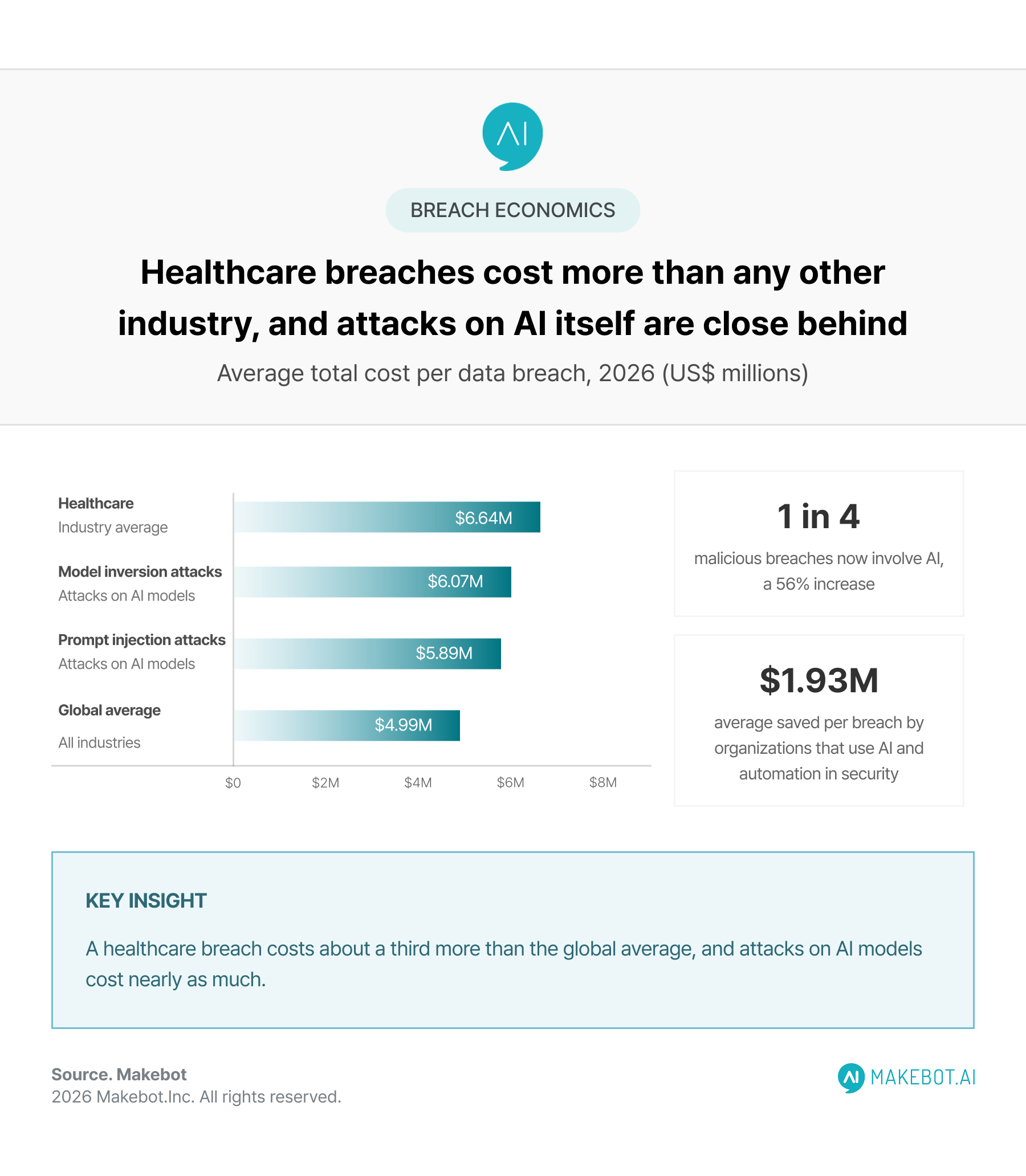
- Healthcare breaches cost the most, and AI attacks are rising. A healthcare breach cost $6.64 million on average in IBM's 2026 study, and one in four malicious breaches now involves AI.
- The identity check is the real front door. Attackers have already fooled health-sector IT help desks using stolen personal details. An AI agent that asks the same questions can be fooled the same way.
- The systems around the AI are the weakest link. Compromised APIs, plug-ins, and cloud misconfigurations caused the most AI breaches, and 92% of organizations with AI breaches lacked proper AI access controls.
- AI leaders manage risk as part of growth. Only 6% of McKinsey respondents are AI high performers, and they are more likely than others to redesign workflows, measure results, and manage AI risks.
- Hospitals should not wait for the new HIPAA rule. The final Security Rule update is expected in July 2027, but the current rule applies today.
Introduction: The Hospital Front Desk Is Becoming Software
At more and more hospitals, the first voice a patient hears on the phone is an AI agent. It checks who is calling, books visits, answers billing questions, and may read the electronic health record (EHR). This makes patient access AI agents one of the most exposed parts of a hospital. They face the public, run day and night, and connect to very valuable data.
Companies are scaling up AI agents, including AI agents in healthcare, while identity and access controls around AI fall behind. This article explains where PHI data security and healthcare identity security break down, and why healthcare AI security must be part of the design from the start.
AI Agents Are Spreading Faster Than the Profits
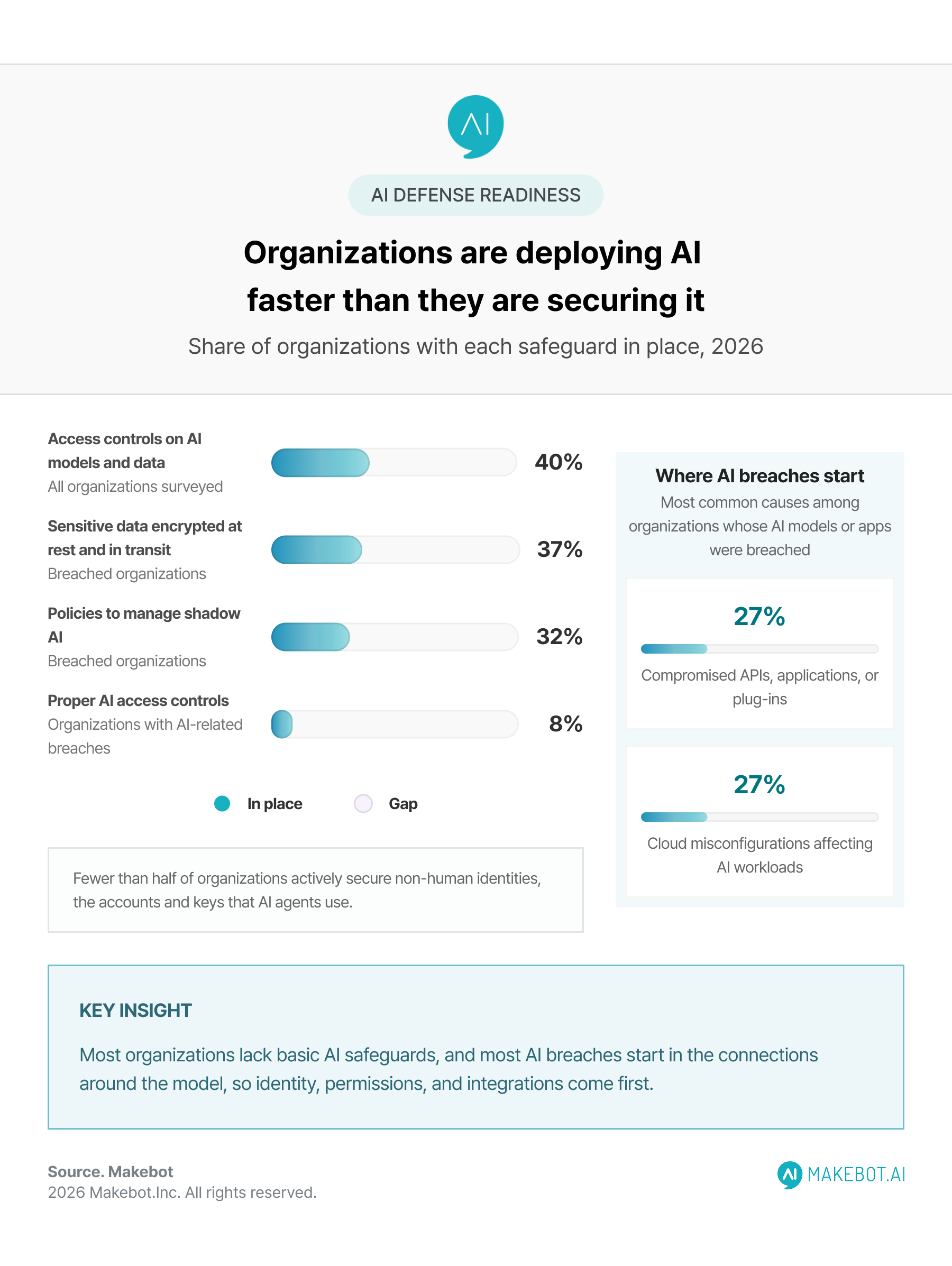
In McKinsey's State of AI in 2026 survey of 1,719 respondents, 44% said AI is scaling across their organization, up from 38%. Yet only 37% report any effect on EBIT, a common measure of operating profit, even though 80% report productivity gains.
Healthcare adds two pressures:
- Building in-house means owning the risk: when a hospital builds its own agent, it also owns the security risk.
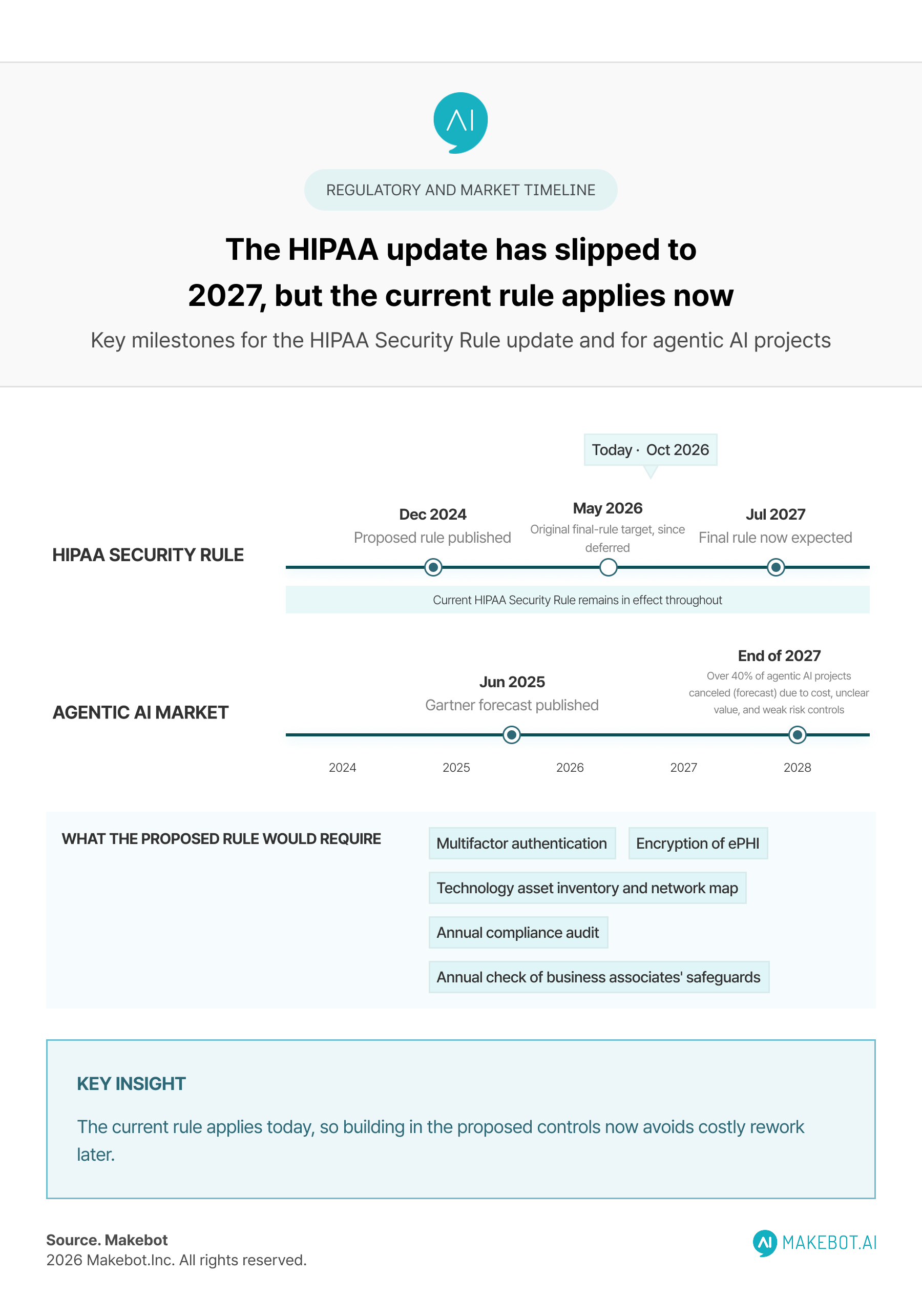
- Many projects will be canceled: Gartner predicts that over 40% of agentic AI projects will be canceled by the end of 2027 because of rising costs, unclear value, and weak risk controls.
Weak risk control is one reason agent projects get shut down before they pay off.
Where the Risks to PHI and Identity Really Are
Identity checks are the main target
Many agents check callers with name, date of birth, and address. This fails when attackers already know those facts. An alert from the HHS Health Sector Cybersecurity Coordination Center (HC3) described attackers who called health-sector IT help desks with stolen personal details and convinced staff to register new MFA devices. An AI agent asking the same questions is just as easy to fool. Cloned voices make it worse, since most AI-driven breaches used deepfake impersonation or AI-powered malware.
The conversation opens new ways to leak data
A healthcare LLM (large language model) reads its own instructions, patient messages, and patient records at the same time. The OWASP Top 10 for LLM Applications 2026 ranks prompt injection first, sensitive information disclosure second, and excessive agency third. In a hospital, a caller might tell the agent to read out another patient's appointments.
Connected systems cause the most AI breaches
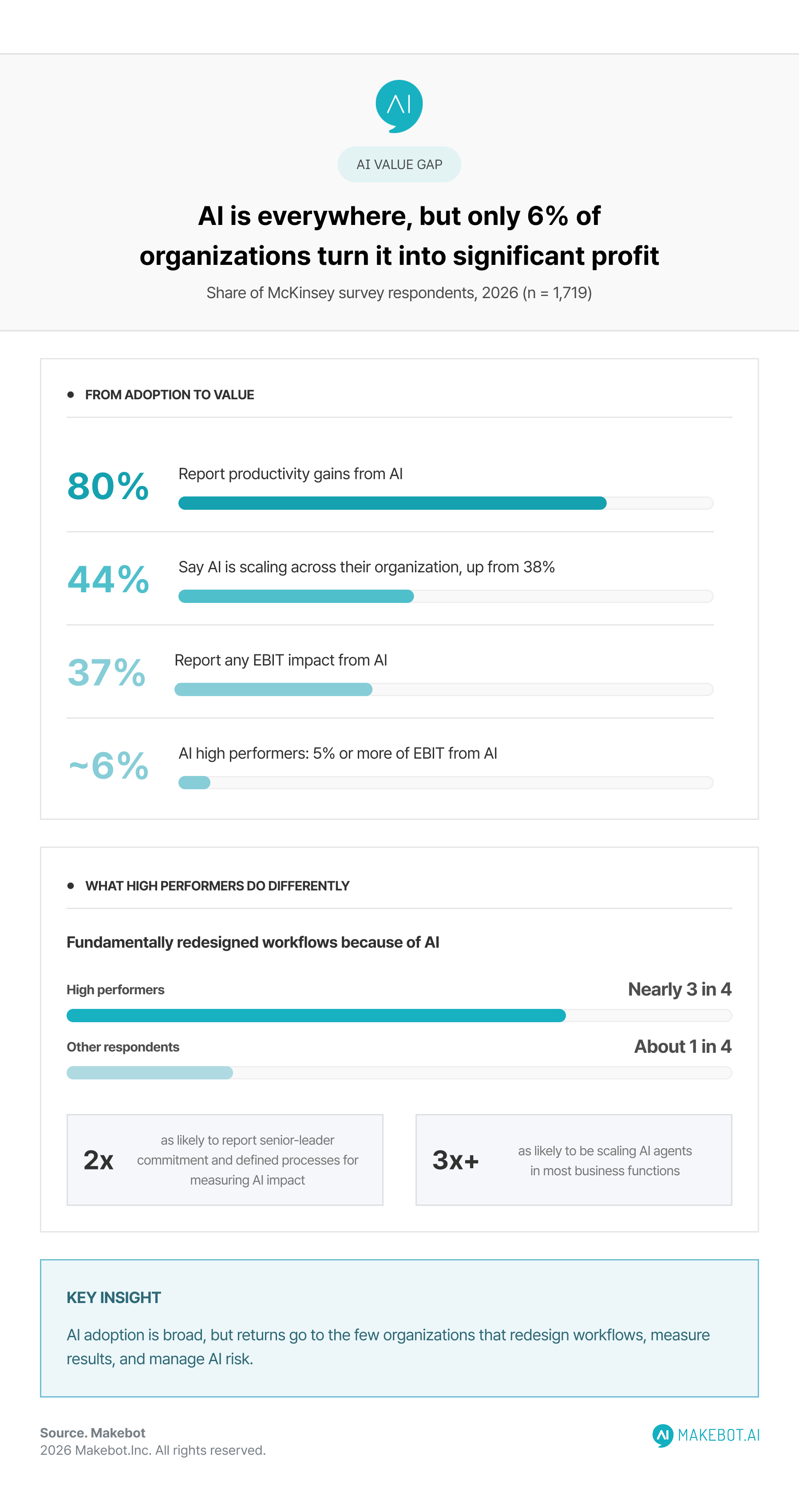
For breached AI models or apps, the top causes were compromised APIs, applications, or plug-ins (27%) and cloud misconfigurations (27%). What matters most is how the AI is protected after it goes live.
What Getting It Wrong Costs
A healthcare breach cost $6.64 million on average in IBM's 2026 study, the highest of any industry. IBM's X-Force analysis shows how weak most AI defenses still are:
- Access controls: only 40% of organizations use access controls on AI models and data.
- Machine identities: fewer than half actively secure non-human identities.
- Attack costs: prompt injection breaches averaged $5.89 million.
On the upside, organizations using AI and automation in security saved $1.93 million per breach.
HIPAA is tightening, just slowly
The proposed HIPAA Security Rule update would require MFA, encryption of ePHI with few exceptions, technology asset lists, data flow maps, and yearly checks of vendors' safeguards. The final rule is now expected in July 2027, but the current rule remains in effect. Healthcare data privacy rules already apply to every agent in use today.
How to Build a Safer Patient-Access Agent
The core rule: never trust a caller more than the caller has proven. A tiered identity model matches the check to how sensitive the request is.
Public questions, such as hours or parking, need no identity check, so the agent shares only public information. Scheduling requests need a record match plus a one-time code, and the agent can use only the scheduling system. PHI requests, such as test results or bills, need a patient portal login or an equal check, and the agent sees only the verified patient's data. Account changes, such as a new phone number or proxy access, need a strong check plus separate-channel confirmation, and the agent sends them to staff for review.
The account-change rule matters most, since changing contact details is what the HC3 attackers did when they registered new MFA devices.
Keep control in the code, not in the AI's instructions
OWASP's guidance on prompt injection and excessive agency points to limits built into the system:
- Narrow tools: a single "reschedule appointment" function, never open-ended EHR searches.
- Locked to one patient: every data request is filtered on the server to the verified patient.
- Human approval: staff approve high-risk actions.
- Agent as an account: rotate its keys, log every action, and review its permissions like a senior staff account. This is where AI security in healthcare meets identity management.
Why Some Organizations Get Returns and Others Get Stuck
Good design needs healthcare AI governance behind it, meaning clear rules, roles, and oversight. In McKinsey's survey, AI high performers stand apart:
- Workflows: nearly three-quarters have fundamentally redesigned workflows, compared with one-quarter of others.
- Measurement: they are twice as likely to have defined processes for measuring AI impact.
- Risk: they are more likely to be reducing AI risks, including unintended actions.
The companies getting the most value from AI also manage more AI risk. The survey shows these go together, which challenges the belief that security slows growth.
AI laggards stay stuck in pilots. They add an agent to the old call script, rely on personal questions, give wide EHR access, let IT own the bot with compliance reviewing it after launch, and count calls handled. AI leaders scale with returns. They redesign the process around tiered identity, use stronger checks for riskier requests, and lock narrow tools to one patient. Access, security, privacy, and clinical leaders share ownership, and they measure problems solved, incidents, and cost per contact.
Watch for shadow AI. Some departments launch their own AI tools without formal review, and IBM found that 68% of breached organizations lacked policies to manage shadow AI.
A Step-by-Step Plan for Hospital Leaders
- List and map everything. Record every agent, model, data store, and connection that touches ePHI, then map how the data moves.
- Sort requests by risk. Set the minimum identity check for each tier.
- Strengthen identity checks. Require separate-channel confirmation for contact changes.
- Limit what the agent can do. Use narrow tools and send high-risk actions to staff.
- Test it like an attacker. Try prompt injection, cloned voices, and social engineering before launch.
- Track value and risk together. Report problems solved next to failed checks and security incidents.
Conclusion: Security Is How AI Agents Pay Off
Attacks on AI are rising, and 92% of organizations breached through AI lacked proper AI access controls. For hospitals, generative AI in healthcare is becoming the first thing patients meet. Hospitals that treat healthcare AI security as the base of their AI plans will protect patients and build agents trusted enough to grow.
Securing the AI Front Door
Hospitals deploying patient-access AI agents need a platform built with security and compliance in mind from day one. CareAI by Makebot is trusted by 500+ clinics and hospitals across Korea, with real-time EMR integration that answers only from verified hospital data. Its 24/7 AI call bot and KakaoTalk chatbot keep patient interactions contained within a governed system, reducing front-desk exposure while cutting no-shows by 30%. To explore Makebot's full suite of healthcare and enterprise AI solutions, visit Makebot.

















What Happens to Marketing When the C-Suite Starts Using AI Every Day?







Why AI Shopping Assistants Will Replace Traditional Ecommerce Search
































Why Generative AI Projects Fail and How to Achieve Scalable AI Success