To Use AI Well, You Need the Very Skill AI Erodes
MIT EEG study: AI users show weakest neural connectivity — 88% adoption, only 6% see EBIT gains.


Introduction
Enterprise AI adoption has crossed a threshold few industries reach this fast: 88% of organizations now use generative AI somewhere in the business. But a strange thing happens once AI in the workplace becomes the default - the skill needed to use it well starts thinning out. Supervising an AI's output, catching its confident mistakes, and knowing when to override it all depend on judgment. That judgment isn't innate; it's built through the slow, effortful work of thinking something through yourself - the exact work AI now lets people skip. This is the supervision paradox, and it's showing up in EEG labs, university surveys, and boardroom ROI numbers at the same time. This article walks through what the research actually shows, why some organizations are absorbing the cost while others aren't, and what separates the two.
Why the Conversation Breaks at Checkout, and How Generative AI Turns Chat into a Salesperson. Read here!
The Comfortable, Frictionless Answer
Generative AI's core appeal is that it removes friction. A question that once took twenty minutes of research now takes one prompt. For most day-to-day work, this is a legitimate productivity gain - AI productivity studies consistently show faster first-draft output across writing, coding, and analysis tasks. The problem isn't the speed. It's that the frictionless answer arrives before the person has framed the problem themselves, which quietly changes what the brain does during the task.
- Removing friction removes rehearsal - the mental step where a person tests an idea before committing to it.
- Rehearsal is where recall, pattern recognition, and error-catching actually get built.
- Skipping rehearsal doesn't just save time; it changes what the brain retains from the exercise at all.
Dario Amodei on Building Safe Frontier AI: Anthropic's Vision for the Next Generation of Enterprise Intelligence. Learn more here!
The Supervision Paradox: Who Checks the AI?
Every serious deployment of enterprise AI eventually reaches the same requirement: a human has to review the output before it reaches a customer, a regulator, or a balance sheet. That review is not clerical - it demands the reviewer already have the expertise to spot a plausible-sounding error. This is the paradox at the center of human-AI collaboration: the organization needs sharper judgment exactly as the daily practice that used to sharpen it disappears.
This isn't a hypothetical concern. Gartner's own workforce forecasting anticipates the scale of the problem: the firm predicts that concern over critical-thinking atrophy tied to generative AI use will push roughly half of organizations to introduce "AI-free" skills assessments by 2026 - a striking admission that some baseline of unassisted competence has become something companies now feel they must verify separately.
AI Adoption Isn't the Competitive Advantage. Problem Definition Is. Continue reading here!
The Evidence: Cognitive Debt Is Measurable, Not Anecdotal
Until recently, "AI is making people rely on it too much" was an intuition. Two recent studies gave it data.
MIT Media Lab's EEG study. Researchers led by Nataliya Kosmyna assigned 54 participants to write essays using either an LLM, a search engine, or no tool at all, tracking brain activity across four months. The essay-only "Brain-only" group showed the strongest, widest-ranging neural connectivity, while the LLM-assisted group consistently underperformed at neural, linguistic, and behavioral levels over the study period. Perhaps the most telling detail: self-reported ownership of the essays was lowest among LLM users and highest among the brain-only group, and LLM users struggled to accurately quote their own writing back - a sign the work had never been deeply encoded in the first place. Researchers describe this pattern as cognitive debt: a shallow-encoding cost that accrues quietly and doesn't show up until someone needs to recall or defend the work later.
The Gerlich study on AI and critical thinking. A separate, larger study surveyed and interviewed 666 participants across age groups and professions. It found a significant negative correlation between frequent AI tool usage and critical thinking abilities, mediated by increased cognitive offloading, with younger and more AI-dependent participants scoring lowest. The mechanism matters here: it isn't AI use itself causing the decline directly - it's cognitive offloading, the habit of routing thinking through the tool by default, that mediates the relationship. That distinction is exactly why the fix isn't "use AI less." It's changing what gets offloaded and what gets retained.
- Cognitive debt compounds silently - it doesn't announce itself until a high-stakes moment demands recall.
- The mediating factor is offloading habits, not raw exposure - which means the fix is structural, not abstinence.
- Both studies point the same direction: convenience today, thinner judgment later, unless something else absorbs the difference.
Why AI Pilots Stall After POC (And How to Fix It). Discover more here!
Why This Is an Organizational Problem, Not Just a Personal One
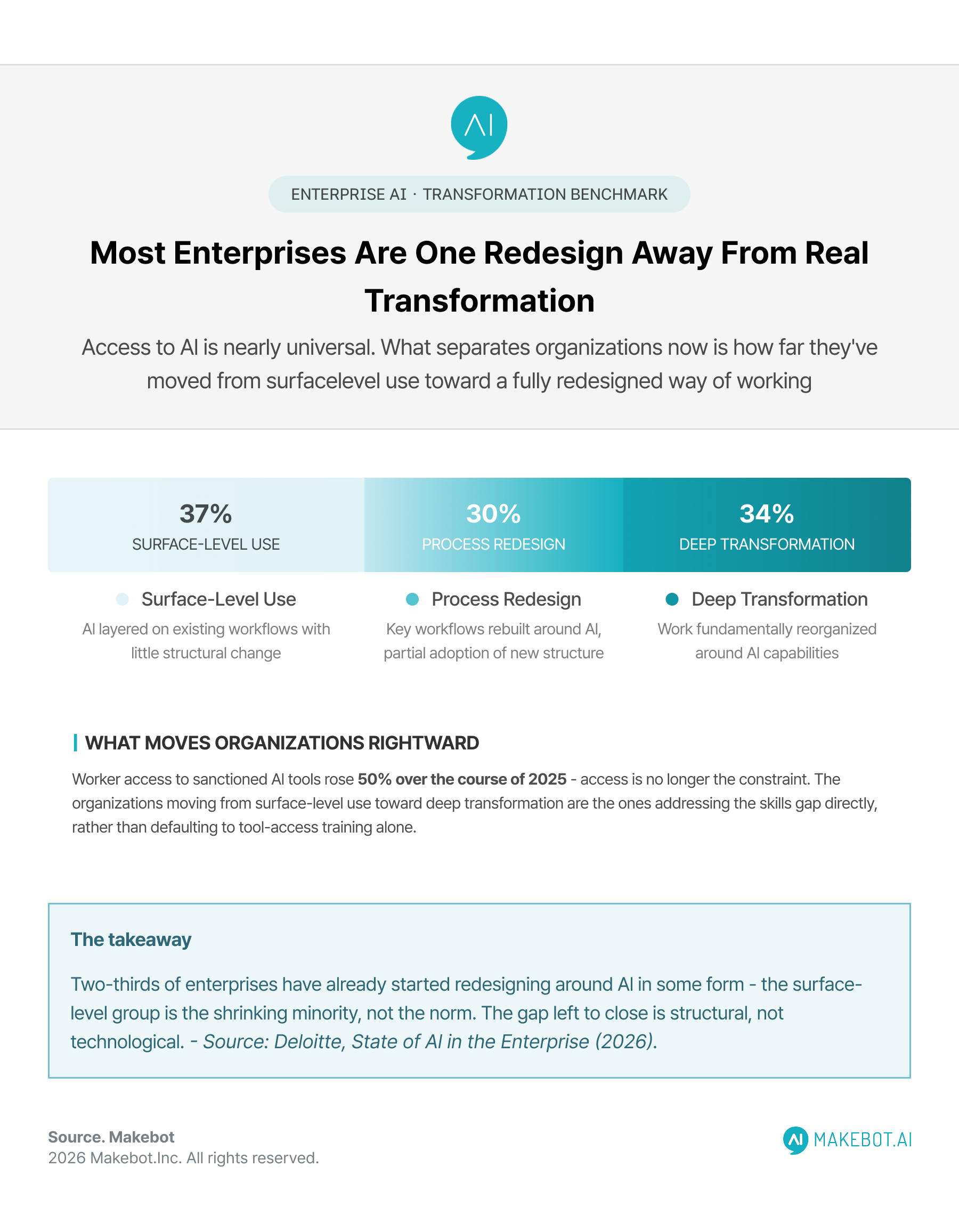
It would be easy to treat cognitive debt as an individual discipline issue - tell employees to think harder, audit less. The data says the organization has a bigger structural gap than any individual habit. Deloitte's State of AI in the Enterprise 2026 survey of more than 3,200 business and IT leaders across 24 countries found that insufficient worker skills is the single biggest barrier organizations report to integrating AI into existing workflows - and that education, not workflow or role redesign, was the most common response (53% of organizations), even though the report identifies redesign as the deeper fix. Worker access to sanctioned AI tools rose 50% over the course of 2025, but only about a third of organizations say they are actually using AI to deeply transform how work gets done; the rest report either partial process redesign or surface-level use with little change to existing workflows. Broken out precisely, the same research puts 34% of organizations in that deep-transformation category, 30% in partial process redesign, and the remaining 37% still at surface-level use.
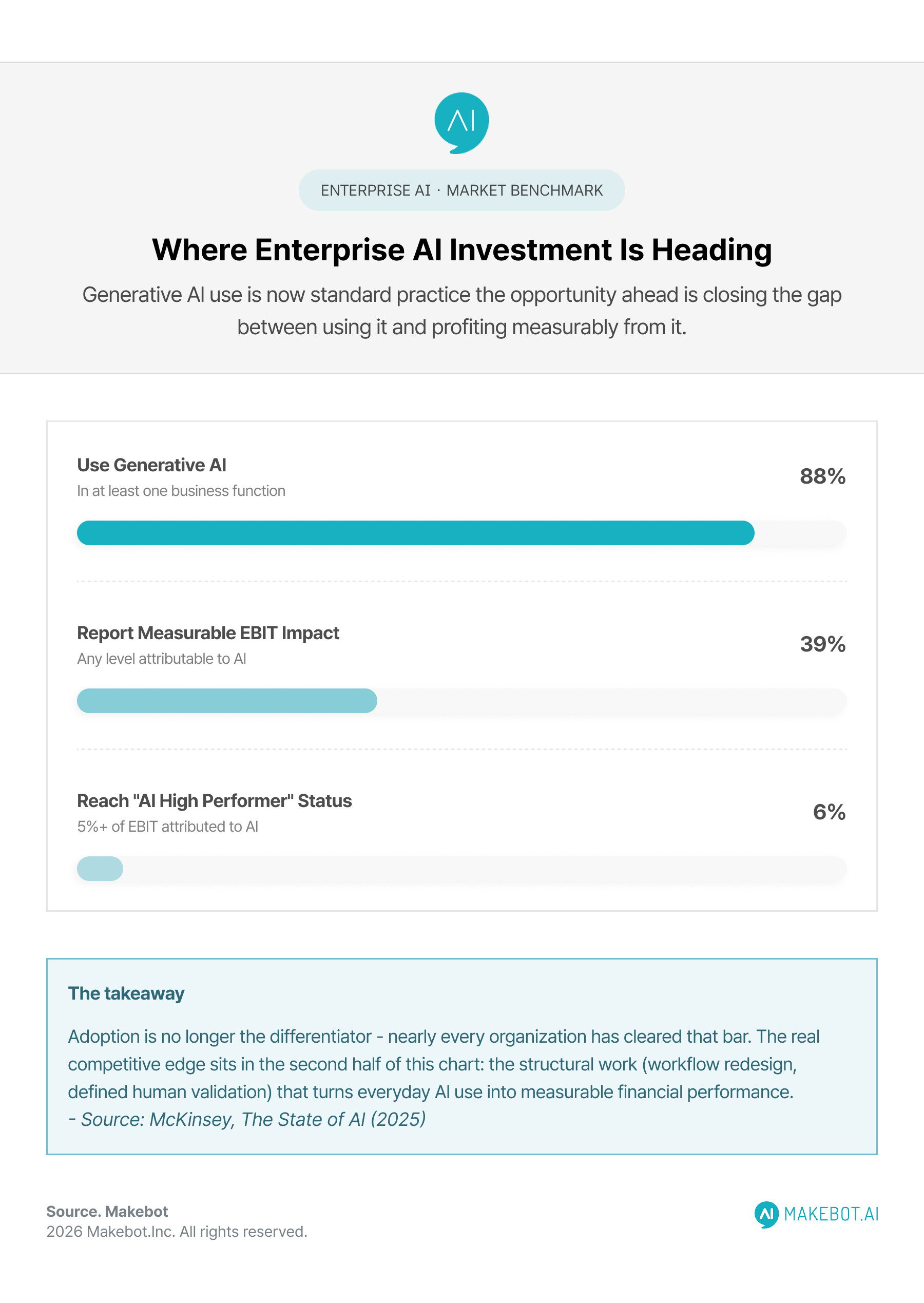
McKinsey's State of AI research quantifies the value side of the same gap: only 39% of organizations report any EBIT impact attributable to AI, and roughly 6% qualify as AI "high performers" attributing more than 5% of EBIT to AI. What separates that 6%? High performers are nearly three times as likely to have fundamentally redesigned individual workflows around AI, and they are consistently more likely than others to have defined processes for when AI outputs require human validation before use. In other words, the organizations capturing real value aren't the ones using AI most - they're the ones who built a structured checkpoint where human judgment still has to show up.
Vibe Coding Got You to a Demo. It Won't Get You Past POC. Explore the full article here!
The Reframe: The Antidote Isn't Willpower, It's Where Knowledge Lives
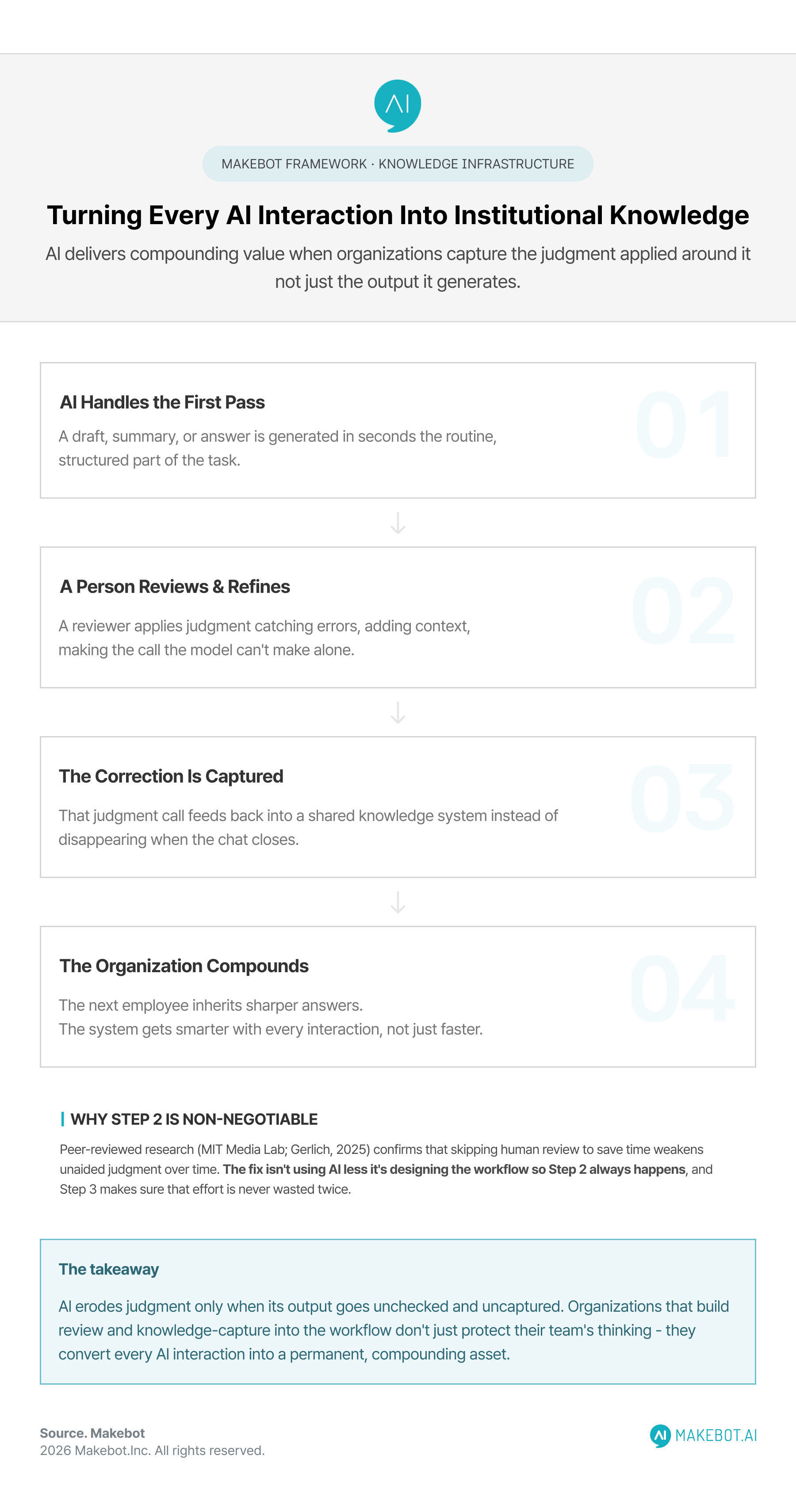
If individual attention is a finite, eroding resource, then the wrong answer is asking people to try harder. The more durable answer is architectural: build a system where every interaction with AI - every question asked, every correction made, every edge case caught by a reviewer - is captured and compounded as institutional knowledge, rather than lost the moment the chat window closes.
This is the deposit-not-withdrawal principle: usage should leave the organization smarter than it found it, even if any single employee's unassisted recall on that topic softens over time. A junior analyst can offload a first-pass summary to AI and still contribute if the correction they make to that summary - the judgment call - gets fed back into a shared knowledge base the next analyst inherits. The individual's cognitive load goes down. The organization's knowledge asset goes up. That is the only version of this trade that scales.
- Structured AI literacy programs that teach when not to defer to the model matter more than tool-access training alone.
- MIT Sloan's guidance on scaling AI points the same way: reserve AI for structured tasks and formats that are easy to validate, and route accountability-bearing judgment calls to people - the split matters more than the tool itself.
- A knowledge loop that survives employee turnover is worth more than any single employee's sharpened instincts, because instincts leave the building and systems don't.
Why AI-Powered Customer Journey Mapping Is Becoming Essential for Enterprise Growth. Find out more here!
Comparative Snapshot: Who Captures Value, and Who Doesn't
Common Challenges When Scaling Past the Pilot Stage
Enterprises rarely fail at the demo stage - they fail at the step after it, when a working prototype needs to become dependable infrastructure. The recurring failure points include:
- No defined checkpoint for human review, so errors compound silently instead of getting caught early.
- Skills investment aimed at fluency, not judgment - teaching people to prompt well without teaching them when to distrust the output.
- Knowledge that lives in chat history, not in a system anyone else can query, so the same mistake gets rediscovered by the next employee.
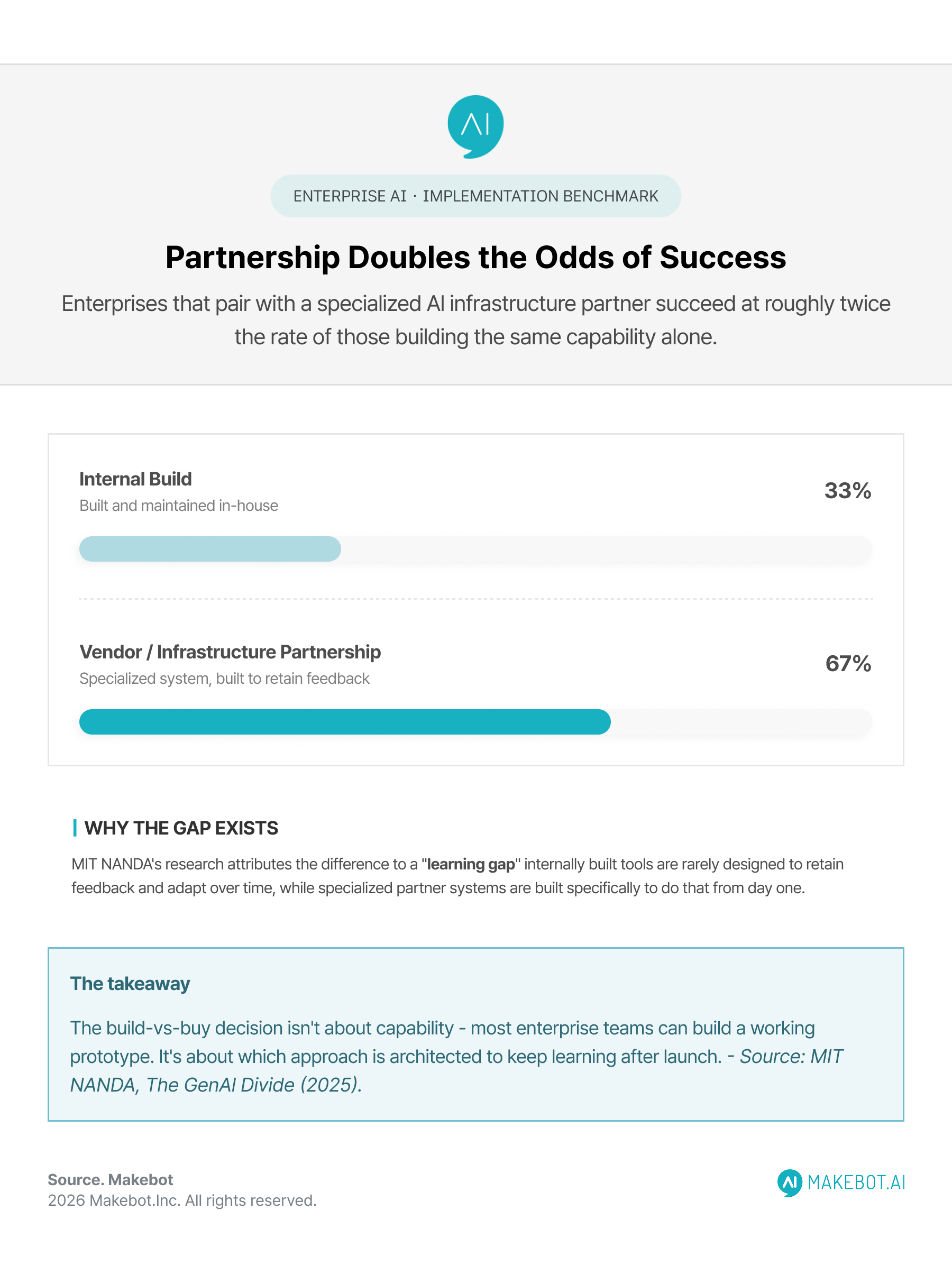
- Underestimating integration work. MIT's NANDA research found the deciding factor in pilot survival wasn't model quality - it was whether the system could retain feedback and adapt to the organization's actual workflow.
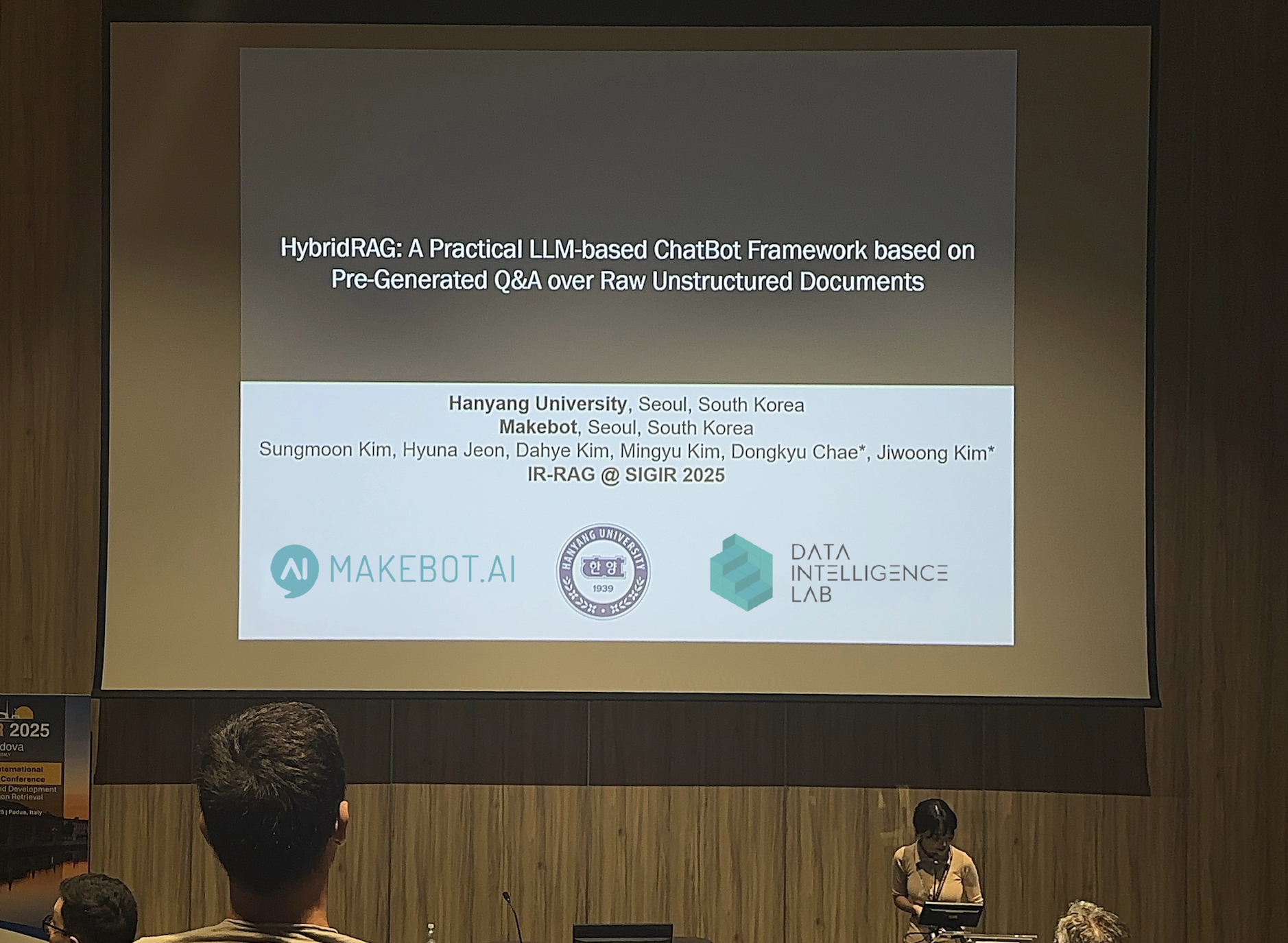
Showcasing Korea’s AI Innovation: Makebot’s HybridRAG Framework Presented at SIGIR 2025 in Italy. Read here!
What This Means for Decision-Makers
The uncomfortable truth in this data is that AI workforce strategy and AI skills strategy can't be separated from each other. Rolling out generative AI without a structured supervision and knowledge-capture layer isn't a neutral choice - it is, by the evidence above, a slow transfer of judgment away from the people who are supposed to be catching the model's mistakes. The organizations pulling ahead aren't the ones restricting AI access; they're the ones that treat every AI interaction as a deposit into a shared, permanent knowledge asset rather than a one-off convenience. That shift - from disposable interactions to a compounding institutional memory - is what lets a company get faster and smarter at the same time, instead of trading one for the other.
Defining exactly where that checkpoint belongs, and what infrastructure captures the knowledge behind it, is the harder problem - and it's the one almost no organization solves by itself. Makebot has built and operated that structure - a HybridRAG-based, self-reinforcing knowledge loop with permission-aware search and audit-grade logging - across more than 1,000 enterprises in finance, public sector, and healthcare. The point isn't a tool that answers faster; it's infrastructure that makes the organization measurably smarter with every interaction, even as the work gets easier for the people inside it.
Judgment Doesn't Scale on Its Own. Systems Do.
The research points to a consistent conclusion: organizations don't create long-term value by giving employees more AI tools alone. They create value by building systems that preserve human judgment, capture organizational knowledge, and continuously improve with every interaction. The real competitive advantage isn't simply adopting Generative AI—it's ensuring that every AI-assisted decision strengthens the organization instead of gradually weakening its expertise.
At Makebot, we've spent years helping enterprises design exactly that foundation. Across healthcare, finance, manufacturing, retail, and the public sector, we've worked with more than 1,000 organizations to build secure LLM-powered AI Chatbot platforms, HybridRAG knowledge systems, and enterprise AI workflows that transform every AI interaction into a lasting organizational asset—not just a temporary productivity gain.
The question isn't whether your organization will use AI. It's whether your organization will become smarter because of it.
.jpg)

What Happens to Marketing When the C-Suite Starts Using AI Every Day?









Why AI Shopping Assistants Will Replace Traditional Ecommerce Search





.jpg)


























Why Generative AI Projects Fail and How to Achieve Scalable AI Success










.jpg)

.png)